What we do
Our performance-driven digital marketing approach focuses on delivering measurable results through data-backed strategies, audience targeting, and continuous optimization. By combining SEO, paid campaigns, and conversion-focused execution, we create marketing systems that improve visibility, attract high-intent traffic, and drive consistent business growth. This ensures every campaign contributes to meaningful outcomes such as leads, conversions, and long-term return on investment.

Data-Driven Campaign Strategy
We design performance marketing campaigns based on keyword research, audience targeting, search intent, and analytics insights to maximize conversions, measurable ROI, and sustained growth across search and AI-driven platforms.
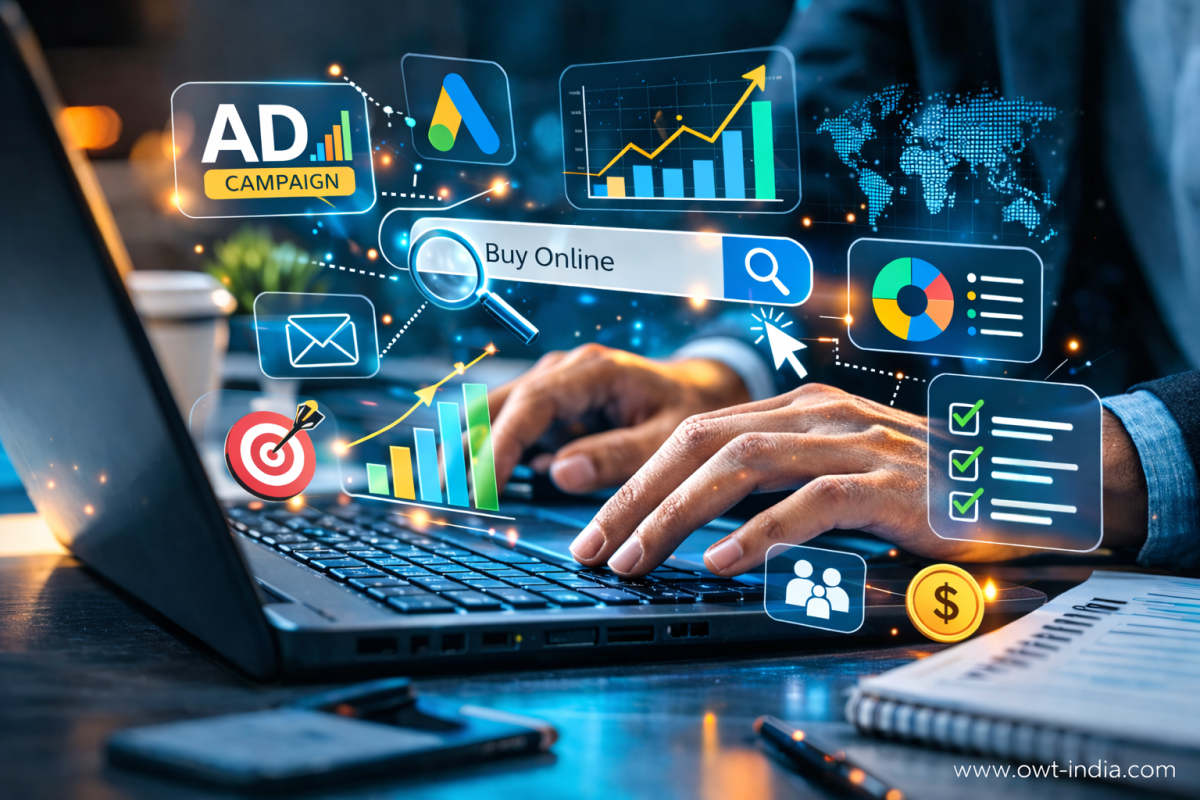
Paid Search & High-Intent Traffic Acquisition
Our paid search campaigns target high-intent keywords and relevant audiences to generate qualified traffic, increase lead generation, and strengthen overall search visibility.

Conversion-Focused Landing Optimization
We optimize landing pages with clear messaging, structured content, strong calls-to-action, and performance analytics to improve conversion rates and campaign performance.

Performance Analytics & Continuous Optimization
Campaign performance is continuously monitored through analytics, conversion tracking, and behavioral data to refine targeting, improve efficiency, and maximize measurable outcomes.
Key Performance Marketing Activities
- High-intent keyword targeting for paid campaigns
- Audience segmentation and remarketing strategy development
- Conversion tracking and marketing analytics integration
- Landing page optimization for improved conversion rates
- Search visibility alignment with SEO strategy
- Continuous campaign monitoring and data-driven optimization
What Sets Us Apart
Ready to drive measurable growth with performance-focused marketing?
Frequently Asked Questions (FAQs)
How does a performance-driven digital marketing agency ensure measurable ROI?
A performance-driven agency builds marketing around defined business outcomes, not activity metrics.
The process starts with setting clear targets such as cost per acquisition, revenue contribution, or return on ad spend. Campaigns are then structured with proper tracking, attribution models, and conversion mapping to ensure every action is measurable.
ROI is ensured through continuous optimization, where budgets are shifted toward high-performing channels, audiences, and creatives based on real data.
A strong trust signal is when the agency ties every campaign decision back to financial impact, not just engagement metrics.
What metrics actually matter in performance marketing beyond clicks and impressions?
Clicks and impressions indicate activity, but not effectiveness. What matters are metrics that reflect business impact.
These typically include:
- Cost per acquisition (CPA)
- Return on ad spend (ROAS)
- Conversion rate
- Customer lifetime value (LTV)
A credible agency prioritizes metrics that show how marketing contributes to revenue and growth, rather than surface-level engagement.
The focus is on quality of outcomes, ensuring that traffic converts and contributes to long-term value.
How do agencies optimize campaigns continuously to improve results over time?
Optimization is a structured, ongoing process driven by data and experimentation.
Agencies test variables such as audience segments, creatives, messaging, bidding strategies, and landing page experiences. Performance data is analyzed regularly to identify patterns and eliminate inefficiencies.
Over time, this creates a compounding effect, where learnings from each cycle improve the next.
A key signal of maturity is when optimization follows a clear framework, not random changes, with documented hypotheses and measurable outcomes.
How is performance marketing aligned with business goals like revenue and customer acquisition?
Alignment is achieved by connecting marketing efforts directly to business funnels and revenue models.
This involves mapping campaigns to specific stages such as awareness, consideration, and conversion, and ensuring each stage contributes to customer acquisition.
Tracking systems are configured to measure how users move from first interaction to final conversion, allowing decisions to be made based on actual business impact.
An effective agency focuses on profitable growth, not just increasing spend or traffic.
What does a performance-driven marketing strategy look like across channels?
A performance-driven strategy is integrated and data-led, not channel-specific.
It combines platforms such as search, social, display, and remarketing into a unified system where each channel supports a specific role in the customer journey.
Budgets are allocated dynamically based on performance, and messaging is adapted to user intent at each stage.
The strategy evolves continuously, using insights from one channel to improve performance across others, creating a cohesive growth engine rather than isolated campaigns.
How do you evaluate whether a performance marketing agency is truly delivering results?
Evaluation should be based on transparency, consistency, and business outcomes.
Key indicators include:
- Clear reporting that connects marketing activity to revenue or conversions
- Regular insights and recommendations, not just data sharing
- Evidence of ongoing optimization and strategic adjustments
Red flags include overemphasis on vanity metrics, lack of clarity in reporting, or static campaign management.
A reliable agency demonstrates value through measurable progress, informed decision-making, and alignment with business goals over time.