Entity-Based SEO and Knowledge Graph Signals: How Search Engines Understand Concepts, Context, and Relationships Beyond Keywords
Entity-based SEO focuses on meaning, not just keywords, helping search engines understand real-world concepts and relationships. By using structured data, consistent identity signals, and contextual content, businesses strengthen recognition and relevance. This approach improves discoverability, supports knowledge graph connections, and positions websites as trusted sources in AI-driven, semantic search environments.
Entity-Based SEO and Knowledge Graph Signals
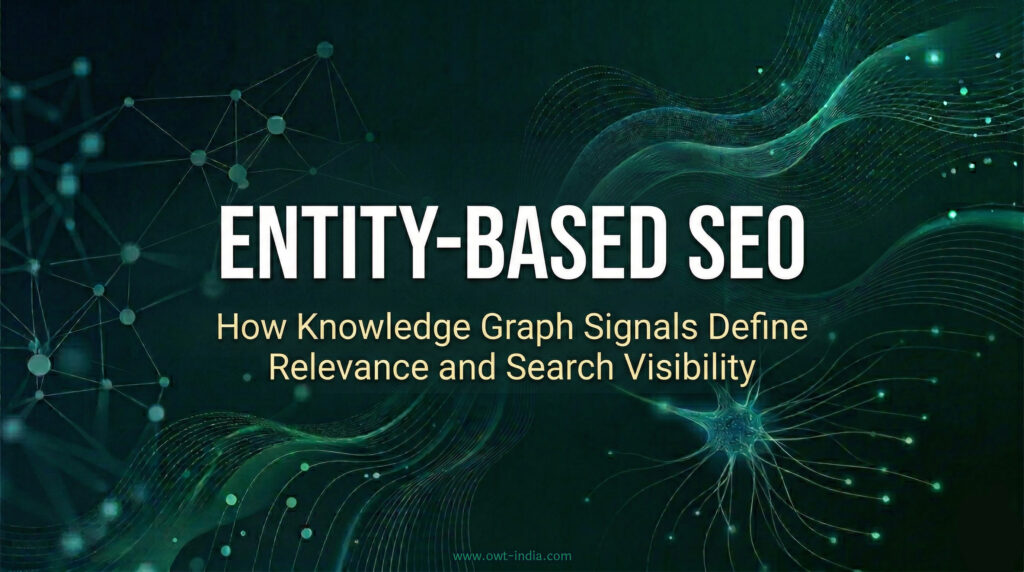
Entity-based SEO represents a shift from keyword matching to meaning-based understanding. Instead of relying only on phrases users type, modern search systems interpret real-world entities—such as brands, people, services, locations, and concepts—and the relationships between them. This allows search engines to move beyond strings of text and understand context at a much deeper level.
At the center of this approach is the Knowledge Graph—a system that connects entities through structured relationships. Rather than treating “digital marketing agency,” “SEO services,” and a brand name as separate keywords, search engines map how these entities relate. This enables them to deliver more accurate, contextual, and relevant results.
For example, when someone searches for a brand, search engines don’t just look for matching keywords. They evaluate:
- What services the brand is associated with
- How consistently it is referenced across the web
- Whether it appears in trusted sources and structured datasets
This is why companies like HubSpot or Moz are easily recognized across search systems. Their entities are clearly defined, consistently referenced, and strongly connected to relevant topics.
How Entity-Based SEO Works
Entity-based SEO relies on three core layers:
1. Clear Entity Definition
Your website must clearly communicate who you are and what you do. This includes:
- Consistent brand naming across all pages
- Defined services and categories
- Clear positioning within a domain
Ambiguity weakens entity recognition. Consistency strengthens it.
2. Structured Data and Schema Markup
Search systems depend on structured signals to understand entities accurately. Implementing schema markup (such as Organization, Service, or Article schema) helps machines interpret:
- Your brand identity
- Your offerings
- Relationships between different content elements
This structured layer reduces guesswork and improves how your entity is mapped within search systems.
3. External Validation and Signals
Entities are strengthened when they are referenced beyond your own website. This includes:
- Mentions on authoritative platforms
- Listings in directories or knowledge bases
- Consistent citations across the web
These signals reinforce credibility and help search engines confirm that your entity is legitimate and relevant.
Why This Matters in AI-Driven Search
In AI-driven environments, entity clarity becomes even more important. Systems like ChatGPT and other answer engines don’t just retrieve pages—they synthesize information based on entities and their relationships.
If your entity is well-defined:
- Your content is easier to interpret
- Your expertise is easier to categorize
- Your brand is more likely to be referenced in generated responses
If not, your content may exist—but remain disconnected from the broader knowledge system.
From Keywords to Context
Traditional SEO asked: Does this page match the keyword?
Entity-based SEO asks: Does this content clearly represent a concept within a network of related entities?
This is a fundamental shift. It moves optimization from surface-level matching to contextual alignment.
The Strategic Takeaway
To succeed with entity-based SEO, businesses must:
- Build clear, consistent identity signals
- Use structured data to define relationships
- Create content that reinforces topical associations
- Ensure external references validate their presence
Ultimately, entity-based SEO helps search systems understand not just what you say—but who you are and what you represent.
And in modern search ecosystems, that clarity is what transforms visibility into recognition, and recognition into long-term authority.
Does Search Know Who You Are or Just What You Say?
We help you build strong entity signals, structured data, and contextual authority so your brand is clearly understood and recommended.