Search is no longer just about ranking pages. With the rise of AI-driven discovery, platforms are increasingly focused on understanding, evaluating, and selecting information to generate answers. This shift introduces a new layer of evaluation where content is not only indexed but also interpreted, validated, and synthesized.
For businesses, this means visibility depends on more than traditional SEO. It depends on whether AI systems recognize your content as credible, structured, and trustworthy enough to use in answers. Understanding these evaluation signals is critical for anyone investing in AI Search Optimization (AIO) and long-term digital authority.
How AI Systems Judge Credibility
AI search engines are designed to prioritize reliable and trustworthy information. Instead of relying only on backlinks or keyword relevance, they assess credibility through a combination of signals.
Content that demonstrates expertise, accuracy, and consistency is more likely to be trusted. This includes clear authorship, factual correctness, and alignment with other reputable sources. If multiple trusted sources present similar information, AI systems gain confidence in that data.
Another important factor is entity credibility. AI models increasingly recognize brands, organizations, and individuals as entities. When a brand is consistently associated with a topic across the web, it strengthens its credibility and increases the chances of being referenced in AI-generated responses.
The Role of Content Quality, Mentions, Structure, and Consistency
AI search evaluation goes beyond surface-level optimization. It looks at how well content communicates knowledge and how consistently that knowledge appears across the web.
Content quality is foundational. High-quality content is not just long or detailed; it is clear, relevant, and aligned with user intent. AI systems prefer content that directly answers questions while also providing depth and context.
Brand mentions act as validation signals. When a business is referenced across trusted websites, publications, and platforms, it reinforces authority. These mentions help AI systems understand that the brand is recognized within a particular domain.
Content structure plays a crucial role in AI interpretation. Well-organized content with clear headings, logical flow, and defined sections makes it easier for AI systems to extract and use information. Structured formats such as summaries, step-by-step explanations, and FAQs improve readability for both users and machines.
Consistency strengthens trust. When the same ideas, terminology, and positioning appear across multiple pieces of content and platforms, it signals reliability. Inconsistent messaging, on the other hand, reduces confidence and may limit visibility in AI-generated answers.
Ranking Signals vs AI Trust Signals
Traditional SEO relies heavily on ranking signals such as keywords, backlinks, and technical optimization. These signals help search engines determine where a page should appear in search results.
AI search engines, however, introduce an additional layer of trust signals. These signals determine whether content should be used in generating an answer.
Ranking signals focus on:
- Relevance to keywords
- Authority of the domain
- Technical performance
AI trust signals focus on:
- Clarity of information
- Consistency across sources
- Credibility and expertise
- Entity recognition and authority
This distinction is important. A page may rank well but still not be used in AI-generated answers if it lacks clarity or trustworthiness. Conversely, content with strong trust signals may influence AI responses even without top rankings.
Why Some Content Gets Cited in AI Answers
Not all content is treated equally by AI systems. Some content is frequently cited or referenced, while other content remains largely invisible.
Content that gets cited typically shares several characteristics.
It provides direct and precise answers to user queries. Instead of forcing users to interpret information, it presents clear explanations that can be easily extracted.
It is well-structured and scannable. AI systems prefer content that is organized into logical sections with clear headings and concise paragraphs.
It demonstrates expertise and authority. Content created by knowledgeable sources or supported by credible signals is more likely to be trusted.
It aligns with multiple trusted sources. When information is consistent across the web, AI systems are more confident in using it.
It maintains contextual relevance. Content that fully addresses a topic, rather than touching on it superficially, is more likely to be selected.
Key Signals AI Search Systems Look For
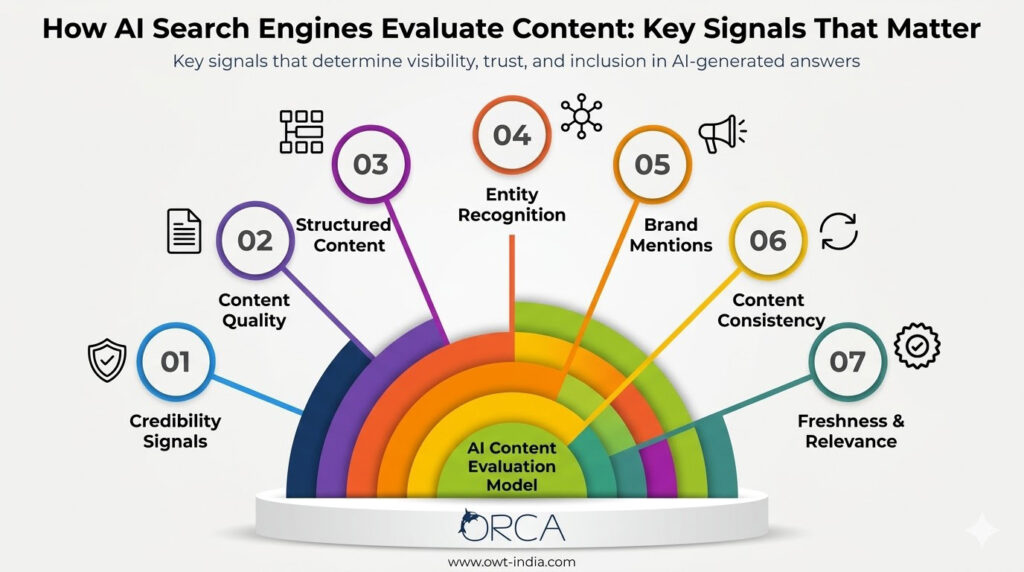
To succeed in AI-driven search, businesses must optimize for a combination of SEO signals and AI trust signals. The most important ones include:
- Clear intent alignment: Content must directly address user questions and search intent
- Structured content: Use headings, sections, and logical flow for better interpretability
- Expert-led insights: Demonstrate knowledge and authority within the topic
- Entity recognition: Build a consistent brand presence across platforms
- Trusted mentions: Earn references from credible websites and sources
- Content consistency: Maintain uniform messaging across all content
- Topical depth: Cover subjects comprehensively, not superficially
- Freshness and accuracy: Keep content updated and relevant
- Semantic clarity: Use clear language and well-defined concepts
- Internal linking: Connect related topics to strengthen context and authority
These signals collectively influence whether content is ranked, trusted, and ultimately used in AI-generated answers.
Building for Visibility in AI-Driven Search
As AI search continues to evolve, the focus of optimization is shifting from visibility in results to inclusion in answers. Businesses that understand how AI systems evaluate content can position themselves more effectively in this new landscape.
Success in this environment requires a balanced approach. Traditional SEO remains important, but it must be complemented with strategies that build credibility, clarity, and authority.
Organizations that invest in AI Search Optimization, structured content, and digital authority will be better positioned to gain visibility, not just in search rankings, but within the answers that users increasingly rely on.
From the Author
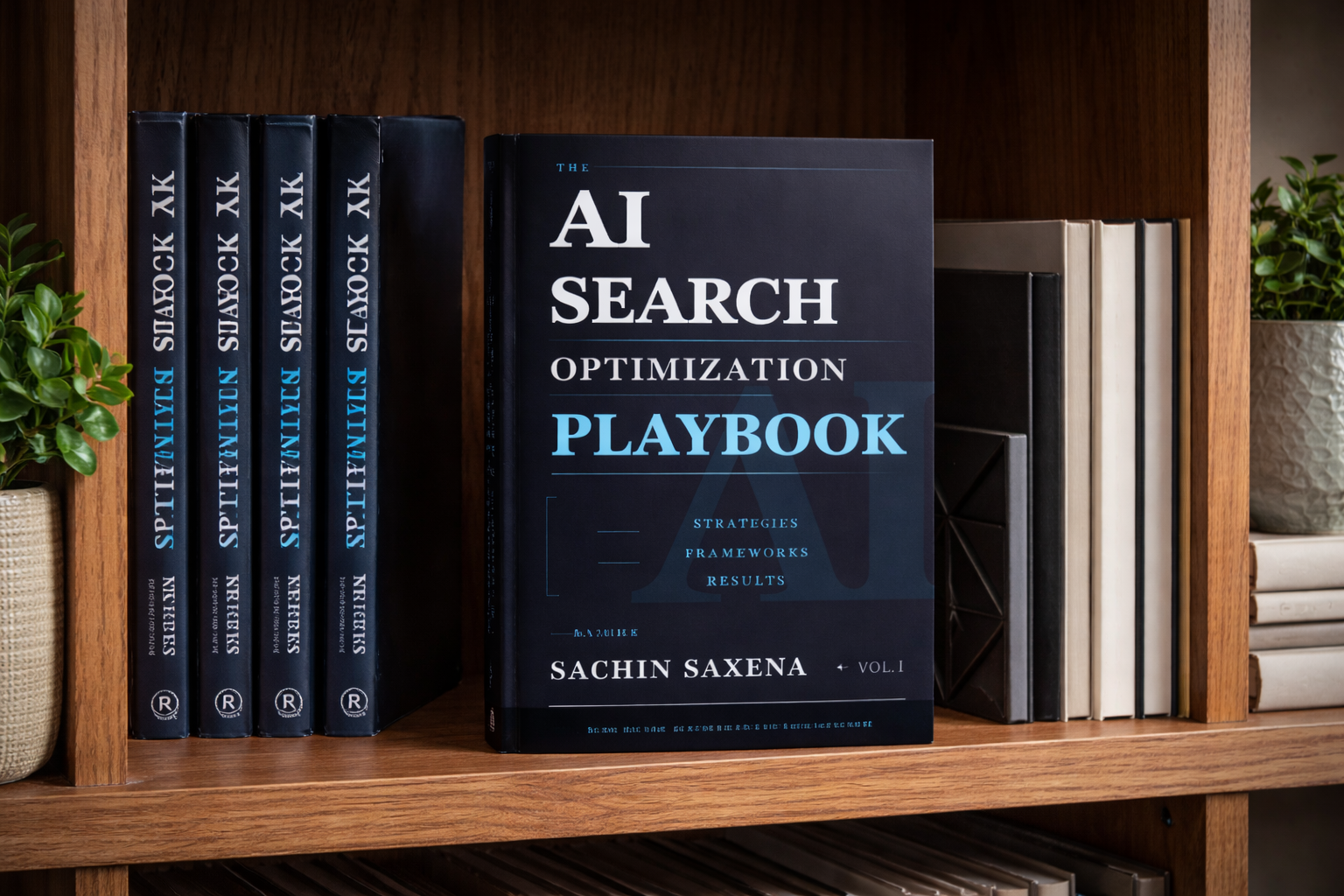
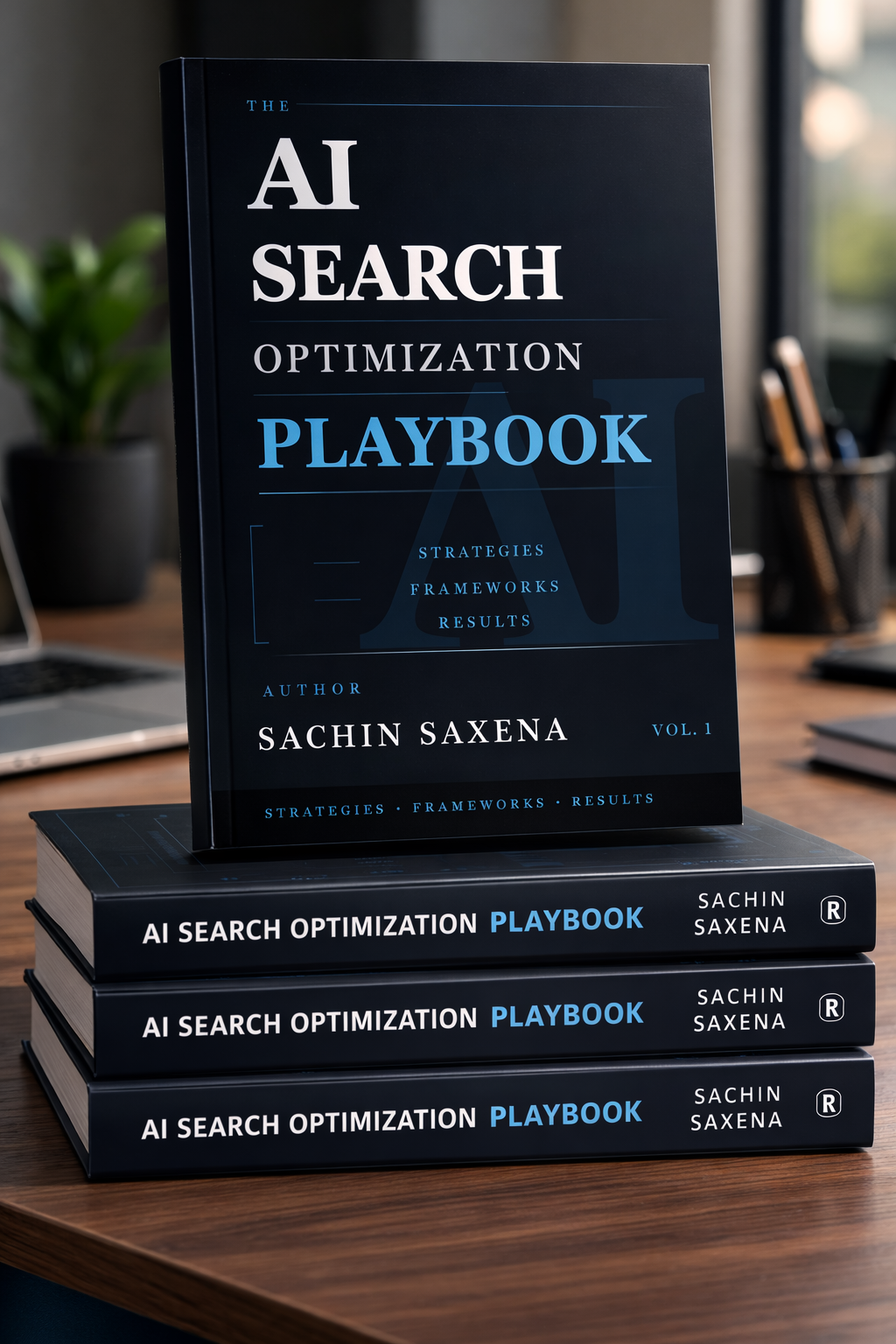
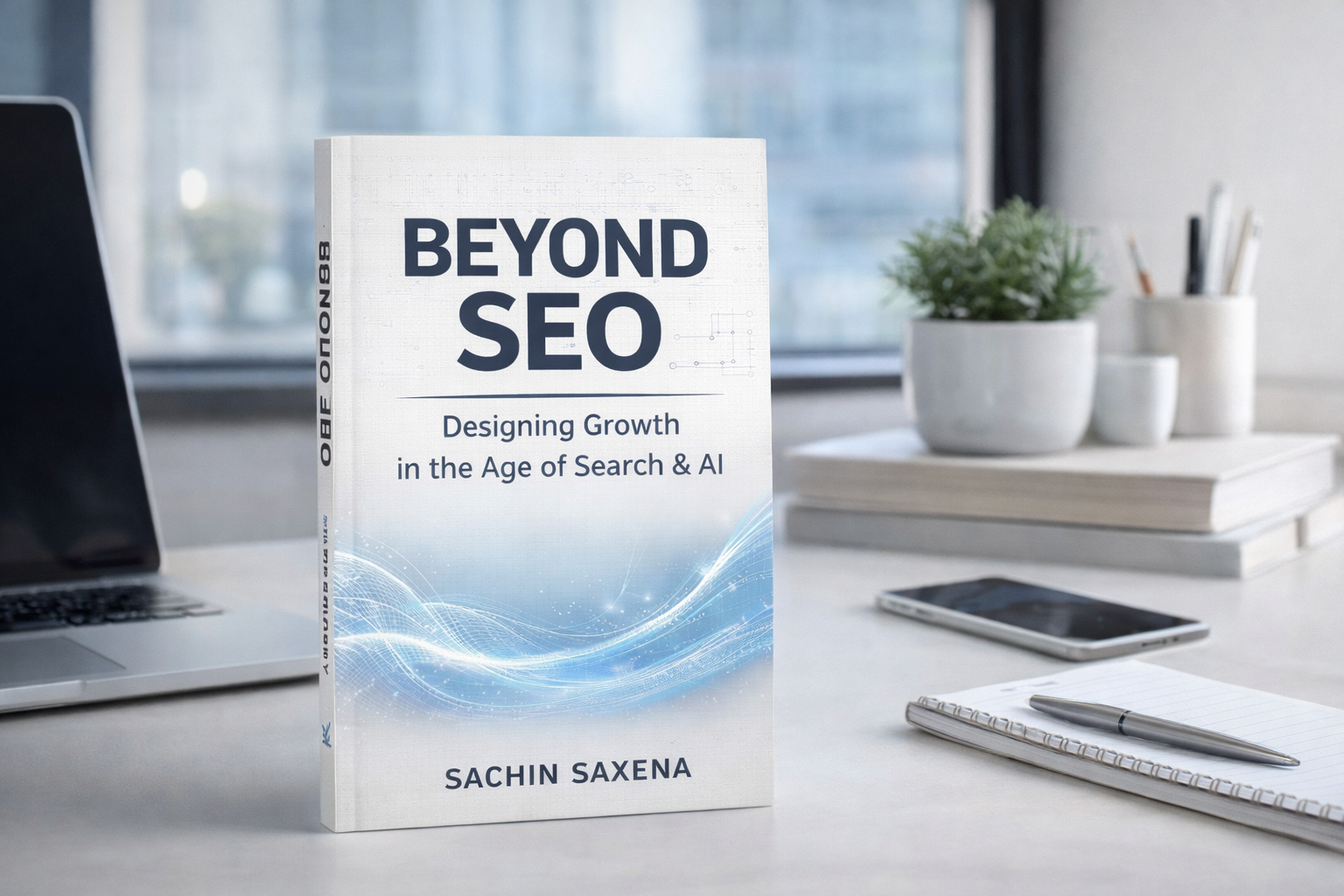
Sachin Saxena, founder of OWT India, explores the mechanics of AI-driven search in his book The AI Search Optimization Playbook. The book provides a structured approach to building digital authority, optimizing for AI-generated answers, and understanding how modern search systems evaluate content.
For businesses looking to stay ahead, it offers a clear roadmap for navigating the transition from traditional SEO to AI-driven discovery.