Search is no longer limited to a list of links. With the rise of AI search engines, users increasingly expect direct, accurate answers instead of browsing multiple pages. This shift is transforming how information is discovered and how businesses achieve digital visibility. Traditional Search Engine Optimization (SEO) focused on rankings and traffic, but the modern landscape demands a broader approach where content is not just found, but also understood and used by AI systems.
This is where Answer Engine Optimization (AEO) becomes critical. AEO extends beyond SEO by focusing on how content can be selected and used within AI-generated answers. Instead of optimizing only for search engines, businesses must now optimize for AI search optimization, ensuring their content contributes to responses generated by platforms like ChatGPT, Gemini, and other AI-driven discovery systems.
What Is Answer Engine Optimization (AEO)?
Answer Engine Optimization (AEO) is the practice of structuring and optimizing content so that it can be interpreted, trusted, and used by AI systems when generating answers. Unlike traditional SEO, where the goal is to rank for keywords and drive clicks, AEO focuses on answer visibility—ensuring your content becomes part of the response itself.
AI search engines evaluate content based on clarity, structure, authority, and relevance. Content that is well-organized, factually accurate, and aligned with user intent is more likely to be included in AI-driven discovery. In this context, AEO works alongside AI search optimization to improve a brand’s chances of being cited, referenced, or recommended.
How AEO Differs from Traditional SEO
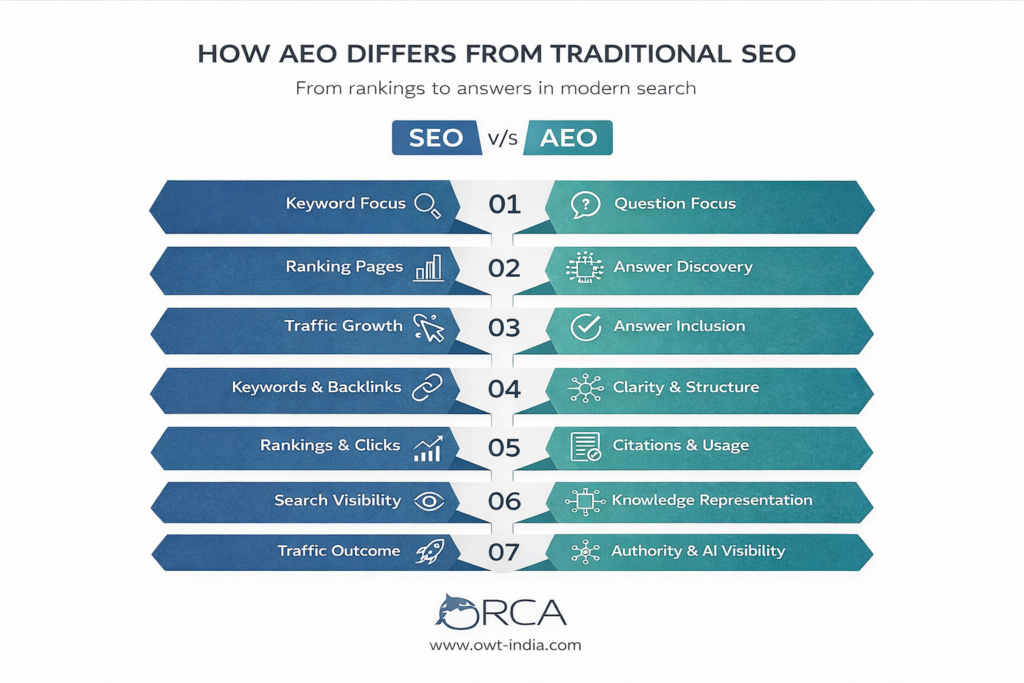
While SEO and AEO share common foundations, their objectives differ significantly. SEO is built around keyword optimization, rankings, and traffic acquisition, whereas AEO is centered on question-based discovery and answer generation.
In traditional SEO, success is measured by how high a page ranks in search results. In AEO, success is determined by whether the content is used within AI-generated answers. This shift changes how content should be created. Instead of focusing only on keywords, businesses must focus on intent, clarity, and knowledge representation.
As AI search engines continue to evolve, the importance of answer engine optimization grows. Businesses that adapt early will gain a competitive advantage in both AI search visibility and long-term authority.
How to Optimize for AI-Generated Answers
Optimizing for AI-generated answers requires a shift from keyword-centric thinking to intent-driven content creation. Businesses must understand what users are actually asking and provide clear, direct, and complete answers.
Content should begin with a concise response to the query, followed by structured explanations that add depth. This improves both human readability and AI interpretability, making it easier for AI systems to extract relevant information. Including natural variations of AI search optimization, answer engine optimization, and related terms strengthens contextual relevance without over-optimization.
Credibility is equally important. AI systems prioritize content that demonstrates expertise, consistency, and trust signals across the web. This includes accurate information, expert-led insights, and alignment with other authoritative sources.
Structuring Content for AI Readability
Content structure plays a critical role in AI search optimization. AI systems prefer content that is logically organized and easy to process. Clear headings, well-defined sections, and concise paragraphs help AI models understand context and relationships between ideas.
Formats such as question-and-answer sections, step-based explanations, and summaries are particularly effective because they align with how AI systems generate responses. Structured data and semantic clarity further enhance the ability of AI search engines to interpret content accurately.
When content is structured effectively, it not only improves SEO performance but also increases the likelihood of being included in AI-generated answers and recommendations.
Real Examples of Answer-Focused Optimization
A SaaS company offering marketing tools creates a detailed guide on AI search optimization. Instead of focusing only on keywords, the content begins with a clear definition, followed by structured sections explaining how it works, its benefits, and real-world applications. This format improves clarity and increases the chances of the content being used by AI systems when answering related queries.
A healthcare platform publishes content on common health-related questions, such as symptoms and treatments. By presenting information in bullet points, short explanations, and FAQ-style sections, the content becomes easier for AI search engines to extract and present as direct answers. This approach improves both search visibility and inclusion in AI-driven responses.
A B2B digital agency builds authority by consistently publishing content around AI search optimization, digital authority, and answer engine optimization. Over time, the brand becomes associated with these topics across multiple platforms. This consistency strengthens entity recognition, making it more likely for AI systems to recommend or reference the agency when users search for related solutions.
The Strategic Importance of AEO
Answer Engine Optimization is not a replacement for SEO but an evolution of it. As AI search engines continue to shape how users discover information, businesses must focus on authority, clarity, and trust rather than relying solely on rankings.
AEO enables organizations to move beyond traffic and focus on visibility within AI-driven discovery. By aligning content with how AI systems interpret and generate answers, businesses can position themselves as trusted sources in their domain.
The future of search will be defined by answers, not just links. Businesses that invest in AI search optimization and AEO strategies today will be better positioned to achieve long-term visibility, authority, and growth.
From the Author
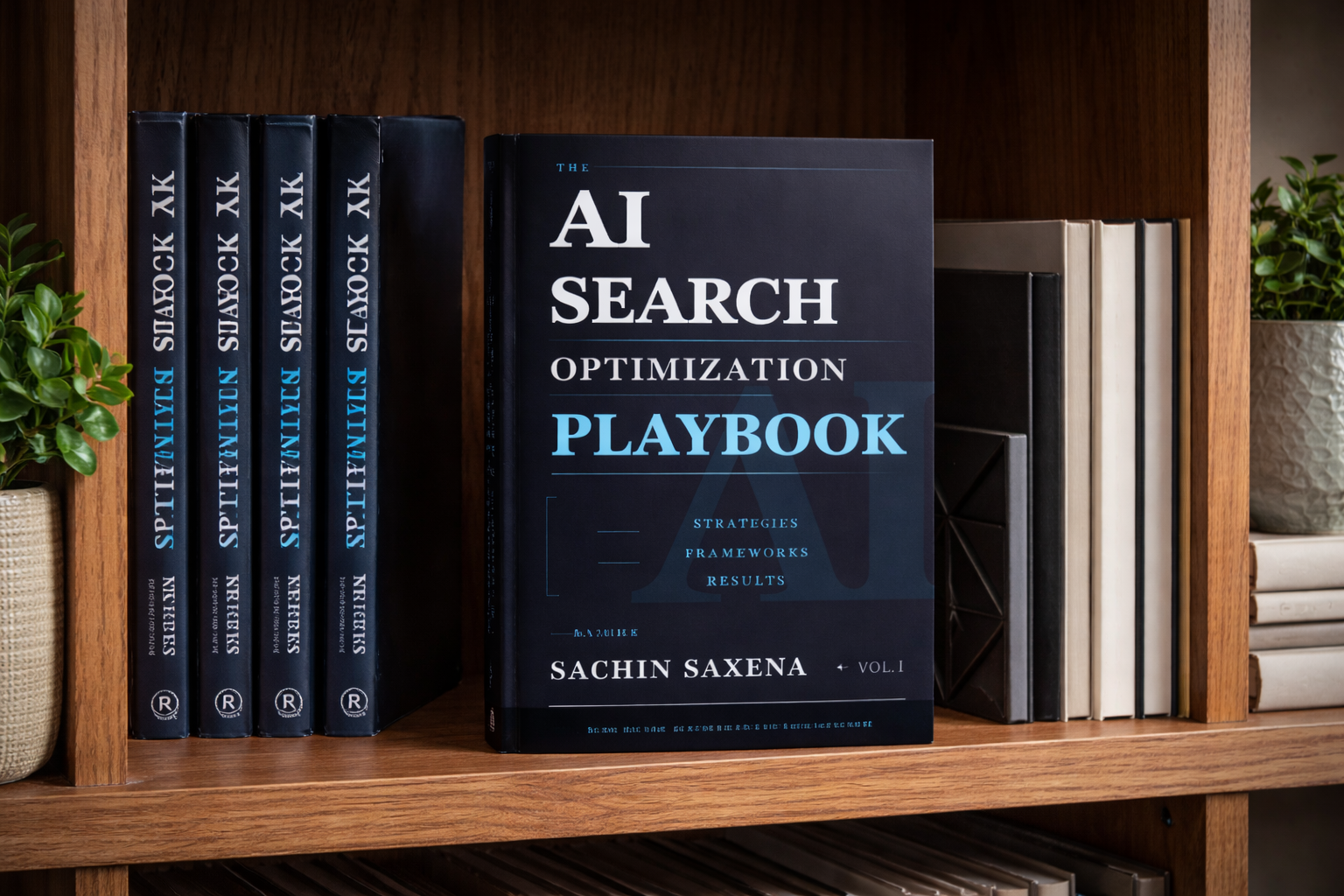
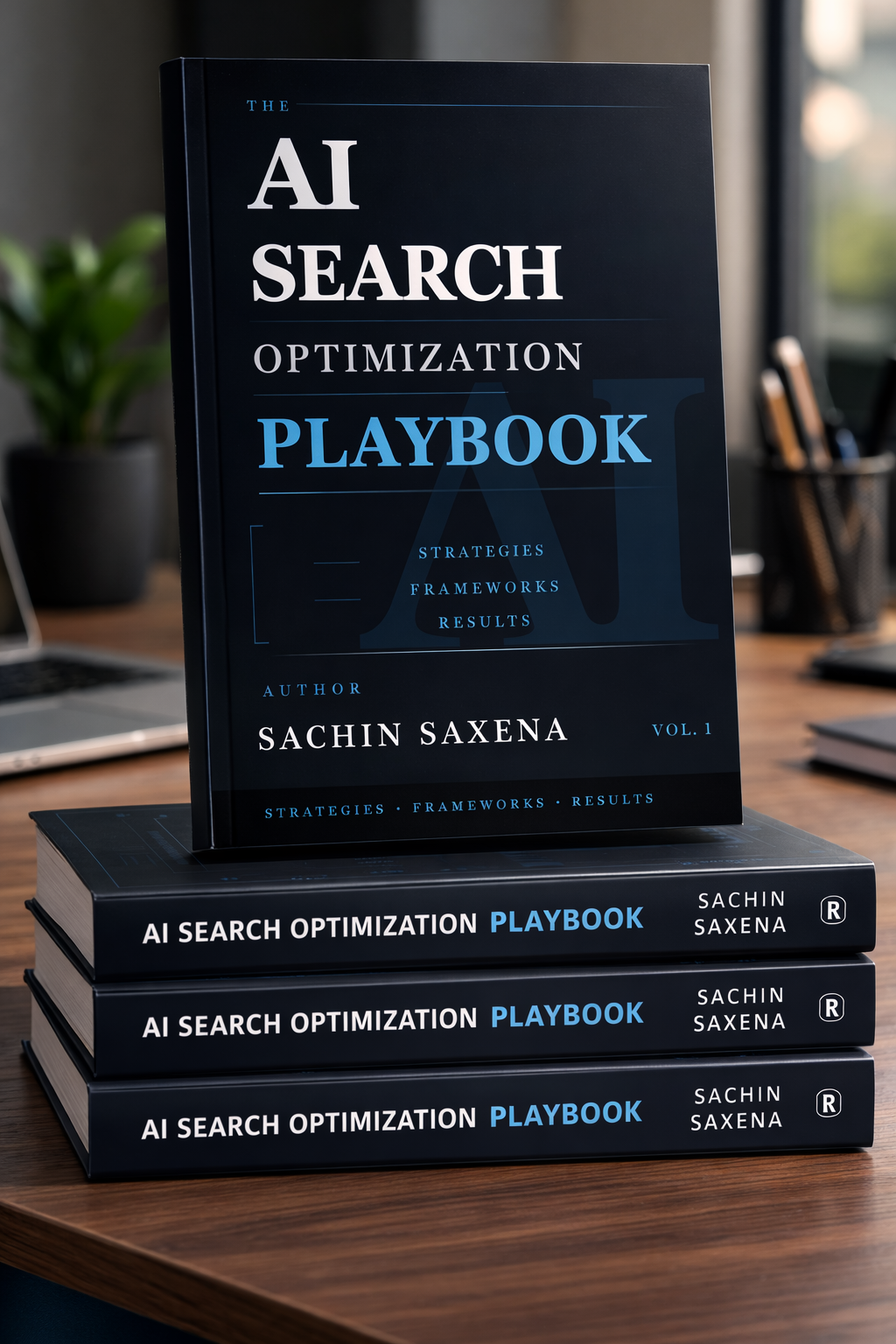
Sachin Saxena, founder of OWT India, explores the evolving landscape of AI-driven discovery in his book The AI Search Optimization Playbook. The book provides practical insights into AI search optimization, digital authority, and answer engine optimization, helping businesses adapt to the changing rules of search.
For organizations looking to build visibility in AI-powered ecosystems, The AI Search Optimization Playbook offers a structured approach to becoming a trusted and recommended source in modern search.